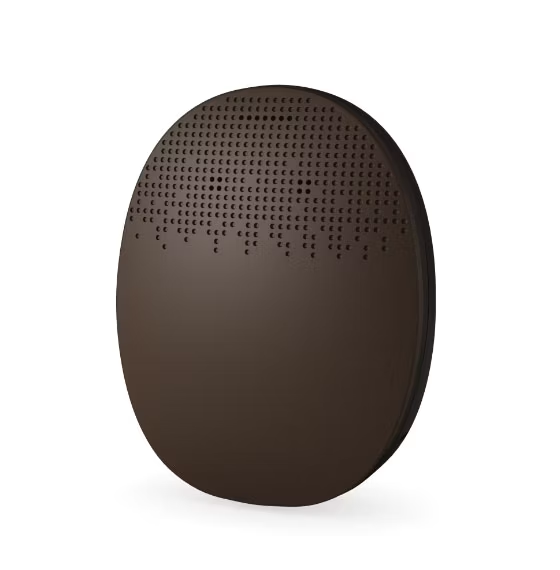
Eleven days after surgery, it was finally time to turn on my cochlear implant. Until this morning, the device inside my head had remained silent. I knew the electrode was in place. I had seen it curling through my cochlea on the postoperative CT scan. But I had no idea what it would sound like once someone finally sent electricity through it.
I had watched activation videos online. Some people cried. Some immediately recognized the voices of their spouses or children. Some appeared overwhelmed by the sudden return of sound. I tried not to expect one of those magical moments.
I understood that activation was not the finish line. It was the starting point. My brain had spent my entire life interpreting sound through hearing aids, and now it was about to receive an entirely different kind of signal. Still, there is no way to know what that will feel like until someone places the processor on your head and turns it on.
At 9:52 a.m. on July 13, 2026, my cochlear implant was activated. And no, I didn’t cry. I listened. The first sound wasn’t robotic. Not in the metallic, computerized way I had expected. It sounded more like a very poorly programmed hearing aid. There was sound. A lot more sound. But hearing more did not mean hearing clearly.
Voices were low, deep and muffled. Everyone sounded vaguely demonic, as though they were speaking from somewhere underwater. I could hear that words were being spoken, but my brain had no idea what to do with the information it was receiving.
It was familiar enough to recognize as speech, but distorted enough that understanding it required work. This was not the instant clarity shown in some activation videos. There were no angels singing. There was no beautifully cinematic moment when the world suddenly came into focus. There were just people who sounded like demons and my brain presumably standing somewhere in the background asking: What the hell is this?
My audiologist gradually adjusted the levels and gave me programs that would allow me to increase the stimulation as my brain adapted. The goal wasn’t to make everything sound perfect that morning. The goal was to introduce the signal without completely overwhelming me.
When I listened with the cochlear implant alone, speech was difficult to understand. When I added my right hearing aid, voices became clearer but the two ears sounded very different. My hearing aid provided the familiar sound my brain already understood. The implant provided new information that my brain hadn’t yet learned how to interpret. At that point, the hearing aid was still doing most of the heavy lifting. The cochlear implant was the confusing new coworker who had arrived with a lot of information but no idea how to explain any of it. Still, it was giving me something my hearing aid could no longer provide: Access. Not clarity yet. Not natural sound. Not effortless speech. But access to frequencies and pieces of words that had been missing for years.
I left Northwestern hearing more than I had when I walked in, but understanding far less of it than I had hoped. Everything sounded strange, deep and muffled. My brain had been handed an entirely new electrical language and expected to translate it in real time. It couldn’t. Not yet.
Activation day isn’t the moment I received perfect hearing. It was the moment my brain received a new signal and began the long process of learning what it meant.
At 9:52 this morning, they turned on the implant. And before the day was over, I heard the wings of a bird taking flight.

Comments