
Once I decided to move forward with a cochlear implant, I had another major decision to make: Which one?
In the United States, there are three primary cochlear implant manufacturers. Each makes an excellent device, and none could guarantee that I would hear better than I would with another. The success of a cochlear implant depends on far more than the name printed on the processor. That somehow made the decision both easier and harder.
I researched all three companies extensively. I compared processors, accessories, electrode arrays, MRI compatibility, sound-processing strategies and everything else I could find. I read other recipients’ experiences. I watched videos. I joined groups. I spoke with individuals who had experience with each type of implant. I asked lots and lots of questions.
In other words, I researched the hell out of this decision too. But ultimately, my choice came down to anatomy. My CT scan showed that my cochlea is longer than average. Because cochleae vary in size, the electrode array used for one person may not necessarily be the best fit for another.
MED-EL offers electrode arrays in different lengths, allowing the surgical team to select one based more closely on the individual anatomy of the cochlea. The goal was to choose an electrode capable of providing coverage along as much of my cochlea as safely and appropriately possible.
Both Allyson, my audiologist, and Dr. Abel David, my surgeon, believed MED-EL was the best choice for my anatomy. That recommendation mattered to me. I could compare features endlessly, but they had something I didn’t: experience working with the devices, reading my imaging and understanding exactly what would be placed inside my head. And unlike the external processor—which may be upgraded or replaced over time—the internal implant and electrode array are intended to remain with me for the rest of my life. I wanted that decision to be based on more than which processor looked nicest or which company offered the most appealing accessories. I wanted the internal device selected for the structure of my ear.
Hearing preservation was also deeply important to me. I understood that no manufacturer or surgeon could guarantee that I would retain the residual hearing in my implanted ear. Surgery itself carries risk, and inserting an electrode into the cochlea can affect whatever natural hearing remains. Still, I wanted an electrode chosen with my anatomy and the preservation of those delicate inner-ear structures in mind. So I chose MED-EL. Not because I believed it was universally better than every other cochlear implant. I chose it because, after reviewing my scans and considering my longer-than-average cochlea, it appeared to be the best fit for me.
On the outside, I would receive two processors: the off-the-ear RONDO 3 and the behind-the-ear SONNET 3. But the most important part of my decision was the part no one would ever see—the electrode array that would be placed inside my cochlea and, hopefully, help reconnect my brain to the words I had been losing. For most of my life, hearing technology had been programmed around the hearing I had. This time, the technology would be chosen around the anatomy I was born with.
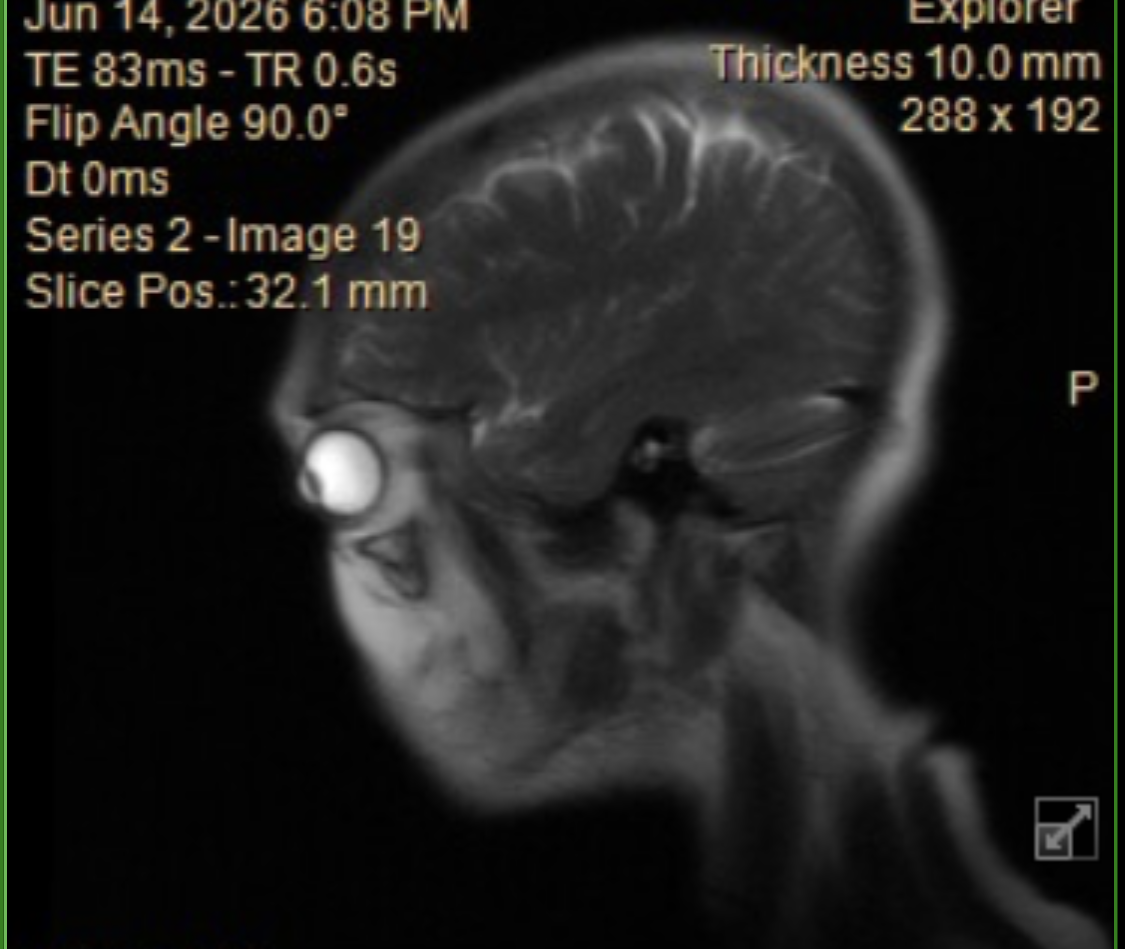
And can I take a moment to mention how both fascinating and terrifying it is to see the CT and MRI scans of your own head? I was dragging the little viewer around, happily exploring the inside of my skull, when the image above suddenly appeared—and I nearly fainted from how absolutely creepy I looked. I mean, it’s just a skeleton, some internal organs and two extremely large eyes staring directly into your soul. Fascinating? Absolutely. Something I ever needed to see? Debatable.

Comments