
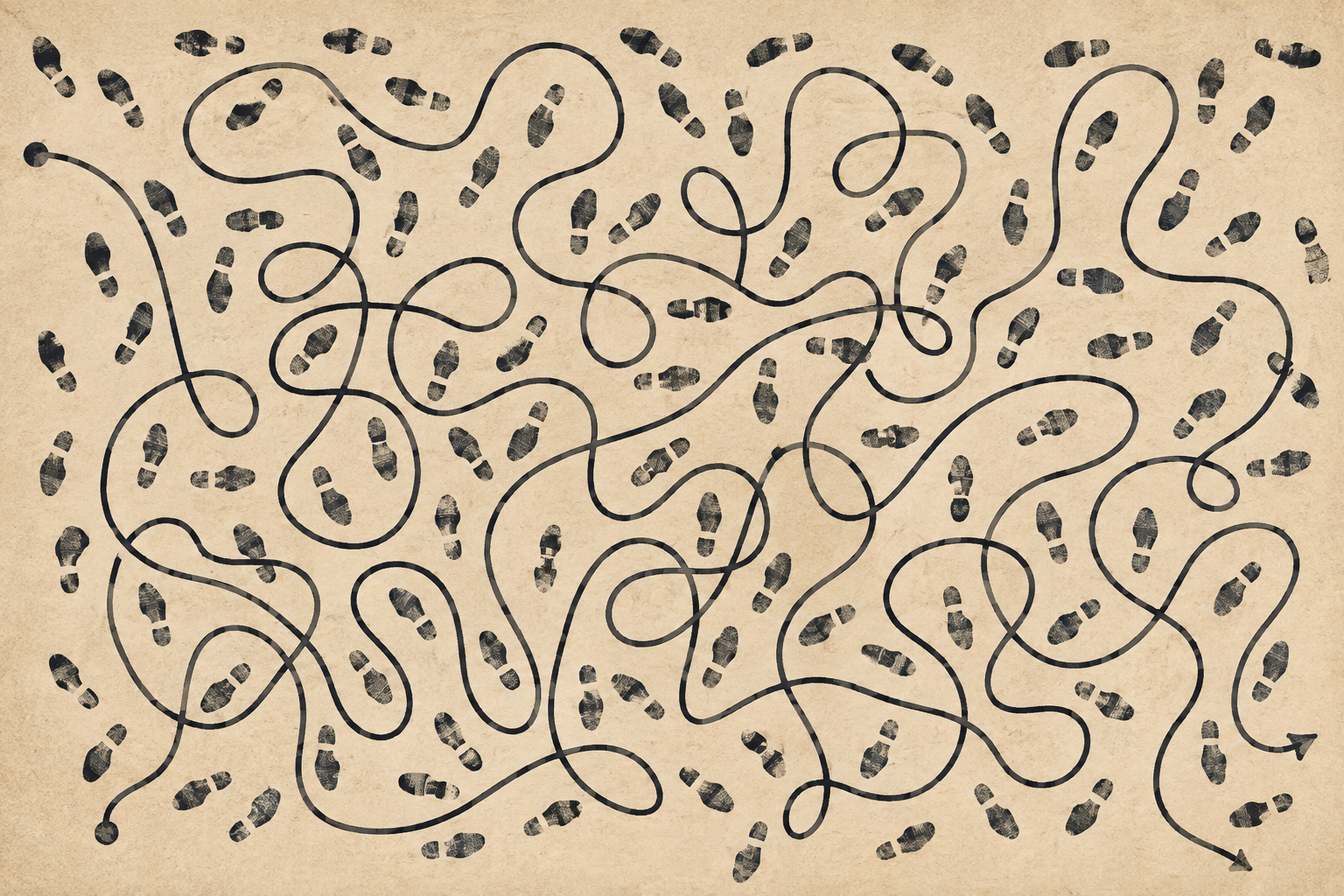
One of the things I am learning about having a cochlear implant is that progress isn’t linear. I wish it were. I would love to say that every day sounds a little better than the day before, that once I can hear something, I can always hear it, that once I understand a voice, it stays understandable, and that each mapping moves me forward and nothing ever seems to move backward. That’s not how this has worked.
There are days when I hear something and think, Holy shit. I can hear that. And there are days when someone is standing three feet away from me and I have absolutely no idea what they just said. Sometimes those days are the same day. I’ve heard birds I couldn’t hear before, cicadas, crickets, water running down a drain, a dog’s whine, and tiny sounds that other people probably don’t even notice because they’ve always been there. I’ve heard the /s/ in words. That one still gets me.
When I was little, I was taught how to make sounds I couldn’t actually hear. My speech therapist taught me how to move my mouth and what the sound was supposed to feel like. I learned to produce a sound based on everything except actually hearing it. Now, decades later, I can sometimes hear the sound everyone was trying to teach me. That’s progress.
But then someone says an entire sentence and my brain apparently responds, What the hell was that? Single sounds can be clear while connected speech completely falls apart. I can understand one person and then struggle terribly when another person joins the conversation. A voice that sounded pretty good yesterday can sound strange today. Sometimes women sound like men. Sometimes everybody sounds old. Other times, people around me sound like they need an exorcism. Sometimes I know someone is talking, I know I’m hearing every bit of something, and I still can’t turn it into words fast enough.
That’s one of the strangest parts of this process. Hearing something and understanding it are not the same thing. More sound doesn’t automatically equal more clarity. Sometimes my cochlear implant gives me an incredible amount of information and my brain just hasn’t figured out what the hell to do with all of it yet.
Then there is my hearing aid. Before my cochlear implant, my right hearing aid wasn’t giving me much speech clarity anymore. Now there are situations where that same hearing aid provides one tiny piece of information that suddenly makes everything easier. My cochlear implant is doing most of the work. My hearing aid is the supporting actor who occasionally wanders onto the stage, delivers one incredibly useful line, and saves the scene. Progress is weird.
Music might be the best example. In the beginning, music was sound without enough structure. I might know intellectually what I was listening to, but that didn’t mean my brain could make it sound like music. I was trained in Music Theory and Composition, so I understand how music is made and how it is supposed to sound. That may have actually made those first attempts at listening even worse because I knew exactly how wrong it was.
I was told by other CI recipients that I should avoid listening to music for quite a while after activation. They warned me that it would sound weird and that hearing it that way might push me away from music for much longer, if not permanently. Yeah, there was no way I was going to stop listening to music. I always have music on. I love music. So three days after activation, I decided to listen to Whitney Houston singing “I Will Always Love You.” About five seconds in, Whitney sounded like a decrepit old man trying to sing a breathy song underwater. It was absolutely the most horrific rendition I have ever heard of this Dolly Parton classic, and I’ve heard some pretty bad ones. I turned the music off and cried.
This absolutely cannot be the way music sounds forever. Of all the things I knew might change with a cochlear implant, the possibility that music could become something I no longer enjoyed felt like a particularly cruel twist of fate. I wanted access to more sound, but not at the expense of something that had always meant so much to me. So I stayed away from music for a couple of days. Then I built up the courage to try again. It still wasn’t great. But this time, instead of listening to the song as a whole and judging how terrible it sounded, I started trying to figure out why it sounded terrible. I realized that one of the problems was that my brain couldn’t distinguish the voices from the instruments. Everything was arriving together as a bunch of electrical signals wreaking havoc on my auditory nerve, and my brain hadn’t learned how to separate any of it yet. And honestly, listening to a hearty vibrato through a CI is what I would imagine what an alien spaceship lifting off into the sky would sound like. Talk about a wild auditory sensation.
So I changed the way I listened. I played songs over and over and gave myself one job: find one thing. It didn’t matter how bad that one thing sounded. Find it and follow it through the song. Maybe it was the beat. Maybe it was a particular instrument. Maybe it was the lead vocal. Then I would listen again and find something else. Eventually I started noticing when backup singers joined in. Instruments began separating from voices. Rhythm became easier to follow. What had initially sounded like one enormous pile of electrical noise slowly started breaking apart into individual pieces. None of those pieces sounded completely right yet. But I could find them. That’s progress.
Recently I listened to Mozart’s Concerto for Flute and Harp, K.299 and could clearly separate the flute, the harp, and the orchestra. I listened to the entire Andantino movement and enjoyed it. I still didn’t get the floaty, butterflies feeling that piece used to give me, and it still doesn’t sound completely right. But I could hear the harp. Both of those things can be true.
I think that’s something that’s easy to lose sight of with a cochlear implant, especially when we’re constantly looking for milestones. How many words did you understand? What was your speech score? How long have you been activated? What can you hear now? Those things have value, but they make progress sound much tidier than it actually is. My progress looks more like this:
Holy shit, I heard that. Wait. What did you say? I heard a bird! Why does everyone sound like an elderly man? Was that an S? I am easily understanding so many words! Why can’t I understand this sentence? I CAN HEAR THE HARP.
And then tomorrow, we do it all over again. I’m starting to understand that the difficult days don’t erase the good ones. If something sounds terrible today, it doesn’t mean my cochlear implant isn’t working. If I struggle through a conversation, it doesn’t erase the bird I heard yesterday. If Mozart doesn’t give me butterflies yet, it doesn’t erase the fact that I can hear the flute and harp separately now. And a really good hearing day doesn’t mean I’m finished either. I’m somewhere in the middle.
My brain is learning. My map is changing. Sounds are appearing, disappearing, sharpening, shifting, and slowly beginning to make sense. Sometimes I take three steps forward and one step backward. Sometimes I have no idea which direction I’m going until I look back and realize how far I’ve actually come. Every once in a while, some tiny sound I’ve never heard before stops me in my tracks.
Other times, I hear sounds that I really wish I never did.
Side-eyeing the guy on the train eating his bagel with his mouth open.
As disgusting as that is, apparently that’s progress too.

Comments